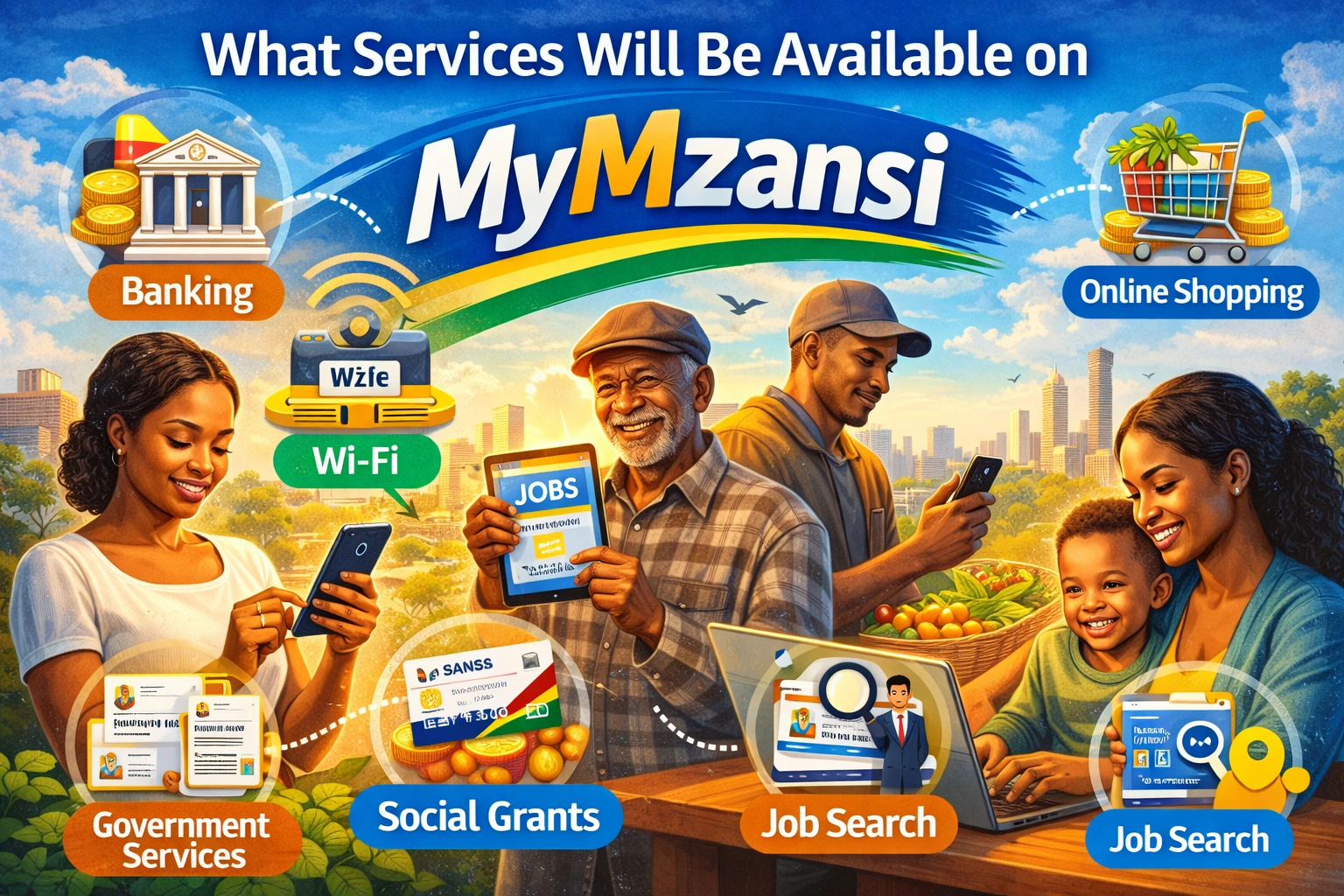
As South Africa builds a unified online gateway for government services, one question many citizens are asking is: what services will be available on MyMzansi once it launches? MyMzansi is designed to be a one-stop digital platform where people can access a range of public services securely and conveniently from their phone or computer.
In this guide, we explain the kinds of services MyMzansi aims to offer, how they will work, what you can expect in early rollout phases, and why this matters for everyday life in South Africa. We also provide background on the platform’s structure and timeline so you know what’s planned now and what could come later.
What Services Will Be Available on MyMzansi–Quick Overview: What Is MyMzansi?
MyMzansi is South Africa’s planned digital government services platform — a unified place to access online services such as grants, identity services, document management, and more. It is part of the broader national digital transformation roadmap aimed at making government services easier to use and more accessible for all citizens and residents, without having to visit multiple department websites or physical offices.
If you’re new to MyMzansi, read our full introduction here:
👉 https://mymzansiguide.co.za/what-is-mymzansi/
How “Services” Are Defined on MyMzansi
In the context of MyMzansi, a service means any online government function that a person can access digitally. This could include:
- Accessing social grants information
- Checking or updating digital ID details
- Filing appointments or tracking status of applications
- Making payments or viewing official notifications
- Accessing personalised government information
The services are planned to be rolled out in phases over several years. Early phases focus on essential services related to identity, social protection and integrated data exchange between government departments.
Priority Services Expected in Initial Phases
1. Digital Identity Services
A core part of MyMzansi is establishing a functional digital identity system that allows people to verify themselves online securely. This is essential for all other services because it enables secure login, authentication, and verified document sharing.
Here’s what digital identity services may include:
- Remote authentication with a secure login
- A verified digital credentials wallet
- Sharing only necessary identity details with services (not full documents)
- Faster verification for things like bank accounts, employment systems, or grant checks
This digital ID is expected to launch gradually starting with earlier adopters and expand to more citizens over time.
2. Social Protection & Grants Integration
Even before MyMzansi is fully live, South Africa already offers social grants through South African Social Security Agency (SASSA). MyMzansi will work to integrate grant information, making it easier for eligible citizens to:
- Track the status of their social grant applications
- View payment history
- Access updates and notifications from a single platform
Initial work on connecting grants to MyMzansi’s systems, such as data exchange pilot tests, has already begun, which shows progress toward this service being available digitally in the early stages of the rollout.
3. Data Exchange and Integrated Services
The backbone of MyMzansi’s service experience is a system called MzansiXchange, a secure data exchange that allows information to flow between government departments quickly and securely.
This means services like:
- Identity verification
- Grant data checks
- Employment and labour data
- Home Affairs document updates
- Tax and revenue information
…can communicate seamlessly without the user needing to re-enter the same information multiple times.
Because departments share data securely, your online experience becomes more convenient and less repetitive.
4. Digital Payments and Government Transactions
MyMzansi is also planned to include government payments, such as:
- Social grant disbursements
- Fines or official fee payments
- Government-to-person (G2P) payments integration
- Government-to-business (G2B) payments in certain services
This means the platform may offer a secure way to receive or make payments associated with official services — all linked securely within the platform.
5. Trusted Digital Channels for Information and Access
Beyond specific services, MyMzansi aims to provide one trusted place to search for:
- Government information
- Service guidelines
- Notifications and alerts
- Personalised recommendations
The idea is to reduce frustration from visiting multiple portals and make it easier to find what you need in one place.
Intermediate and Future Services
Phase 1 and early rollout focus on essential digital services. Longer term, MyMzansi is expected to expand to include:
- Health-related digital services
- Education and skills training applications
- Job and career services (possibly linked with verified credentials)
- Municipal services like rates and utility account access
- Expanded government forms, applications, and notifications
These services will likely come once the core system (like the digital identity and secure data exchange layer) is fully established and widely adopted.
What Users Will Experience on MyMzansi
When MyMzansi services become widely available, users should expect:
✔ A secure login where you can access all connected services
✔ A profile connected to your digital identity and wallet
✔ Notifications and tracking for applications and interactions
✔ Access to services from multiple departments without separate accounts
✔ A consistent interface across services
This experience aims to replace the need to navigate many different government portals separately.
When Services Will Be Available
The rollout timeline is phased:
- Phase 1 (2025–2027): Focus on identity, data exchange, payments, and onboarding initial services — including grants and labour services.
- Phase 2 (2028–2030): Broader service availability, including health, education, business, and more government services.
This means not all services will be available at once. Some will be introduced earlier, and new ones over time.
Security and Privacy Considerations
A major priority of MyMzansi is secure, trust-based access:
- Verified credentials and digital identity protect against fraud
- Secure data exchange ensures departments only share what’s needed
- Your personal data remains under your control
- Services may require different levels of verification
This design helps keep your online interactions safe while providing easier access to government services than ever before.
FAQs: What Citizens Often Ask
Can I apply for services directly through MyMzansi?
Not yet. Early phases focus on integration and access. Eventually, many services, including applications, should be available once rollout progresses.
Will MyMzansi replace all government websites?
The goal is to centralise access, but some services may still be accessible through legacy portals during the transition.
Do I need a smartphone?
A smartphone or computer is needed to access MyMzansi services — but not all services will require a mobile app.
Is MyMzansi safe?
Yes, the system is designed with strong identity verification and secure data exchange in mind.
Will I still need physical documents?
Some services may transition fully online, but others may continue to require in-person verification or physical documents during early phases.
Will all services be free to use?
Access to the platform should be free; however, fees related to specific government services (like licence renewals) may still apply.
Conclusion
MyMzansi represents a bold step in South Africa’s digital transformation journey — bringing government services into a single online platform with secure identity, data exchange, payments, and personalised service access.
While not all services will launch immediately, citizens can expect a phased rollout beginning with core services like digital identity, grants support, and secure access to government information. Over time, more services from across government departments will join the platform, providing greater convenience, transparency and efficiency.
For more background on what MyMzansi is, see our guide here:
👉 https://mymzansiguide.co.za/what-is-mymzansi/
Curious about the team behind this guide? Visit:
👉 https://mymzansiguide.co.za/about-mymzansi-guide/
Ready to explore our homepage and other guides?
👉 https://mymzansiguide.co.za/

Sizwe Xaba is a South African Government Services Researcher and Public Information Writer who focuses on simplifying official processes related to social grants, identity documents, and government support programs. He specializes in researching and explaining updates from agencies such as the South African Social Security Agency (SASSA), the Department of Home Affairs, and other public institutions to help citizens access essential services more easily.
Through his work on MyMzansiGuide, Sizwe provides clear, practical guides covering topics such as SASSA SRD grants, payment dates, status checks, Home Affairs services, and other government updates affecting South Africans. His articles are designed to break down complex policies into step-by-step information that readers can quickly understand and apply.
Sizwe’s research is based on verified information from official government sources, including SASSA, Gov.za, and the Department of Home Affairs, ensuring that readers receive accurate and up-to-date guidance.
His goal is to make government services more accessible by delivering reliable, easy-to-follow information that helps South Africans navigate important applications, benefits, and public services with confidence.
Sources & References
Sizwe’s articles are researched using information from official government platforms, including:
SASSA (South African Social Security Agency)